How to Choose a Global Issue for IB English IO (Examples + Mistakes)
Reviewed by Sandra Steiger, TutorsPlus Education Advisor, May 2026.
Picking the right global issue for your IB English individual oral can feel like one of the hardest parts of the whole process. Get it right, and everything else clicks into place. Get it wrong, and even your best ideas can fall flat. This guide covers what a global issue actually is, how to choose one that works, strong examples, and the most common mistakes to avoid.
Need help with IB English IO?



Introduction
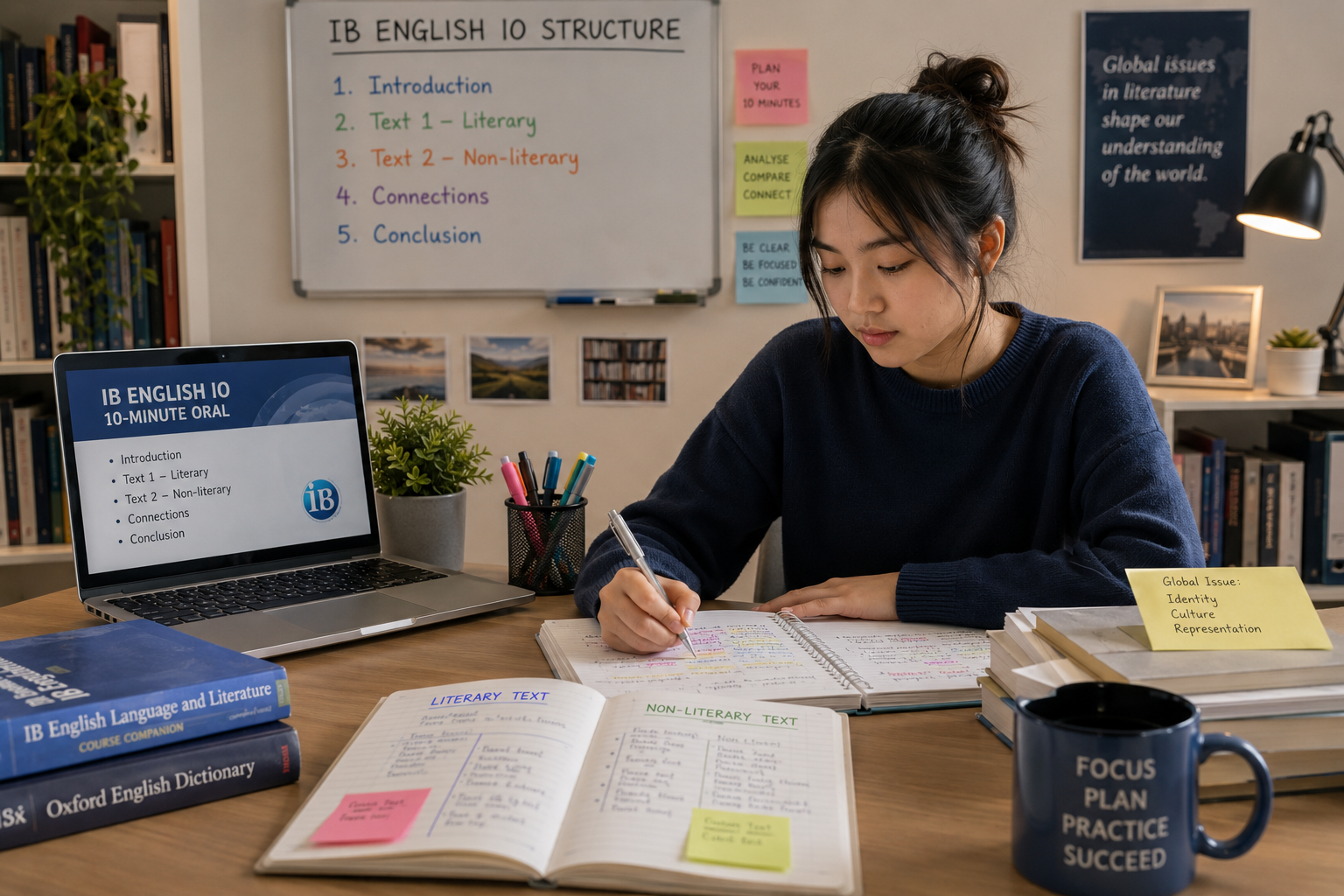
It’s normal to feel a bit intimidated by the thought of your IB English Individual Oral at first. There’s a lot to consider. You have to analyse two texts, connect them through a meaningful global issue, explore authorial choices, and present a focused discussion in just ten minutes!
One element you really need to get right is the global issue. Our team of IB English examiners tell us many students lose marks because their global issue is too broad or unclear, making it difficult to build strong analysis. So choosing a focused and relevant global issue can make the entire IO far more manageable and help create a clearer, more confident oral.
Prefer watching over reading? This video explains how to choose a strong IB English IO global issue, avoid common mistakes, and build better connections between your texts.
What Is a Global Issue in IB English IO?
A global issue in the IB English IO is a real-world concern that goes beyond one country or culture and remains relevant today. The global issue acts as the central thread connecting both texts throughout the oral.
IB English Language and Literature students analyse one literary and one non-literary text, while IB English Literature students analyse two literary works, with at least one in translation. A global issue is also different from a theme. Students must analyse how the creator presents the issue through choices such as:
- tone and voice
- imagery and symbolism
- structure and form
- rhetoric and persuasion
- visual techniques and composition
Why Choosing the Right Global Issue Matters
Your global issue shapes almost every decision you make in the IO. A strong one helps you:
- Build a clearer, more focused argument
- Create natural, convincing links between the two works
- Analyse techniques with more depth and purpose
- Stay on track during the oral itself
- Meet the IB assessment criteria more successfully
Examiners are not rewarding students for retelling the plot or summarising what happens. They want to see thoughtful analysis tied consistently to the global issue. If the issue is fuzzy or too wide, your oral loses focus quickly, and so do the marks.
Need help with your IO?



How to Choose a Strong Global Issue for IB English IO
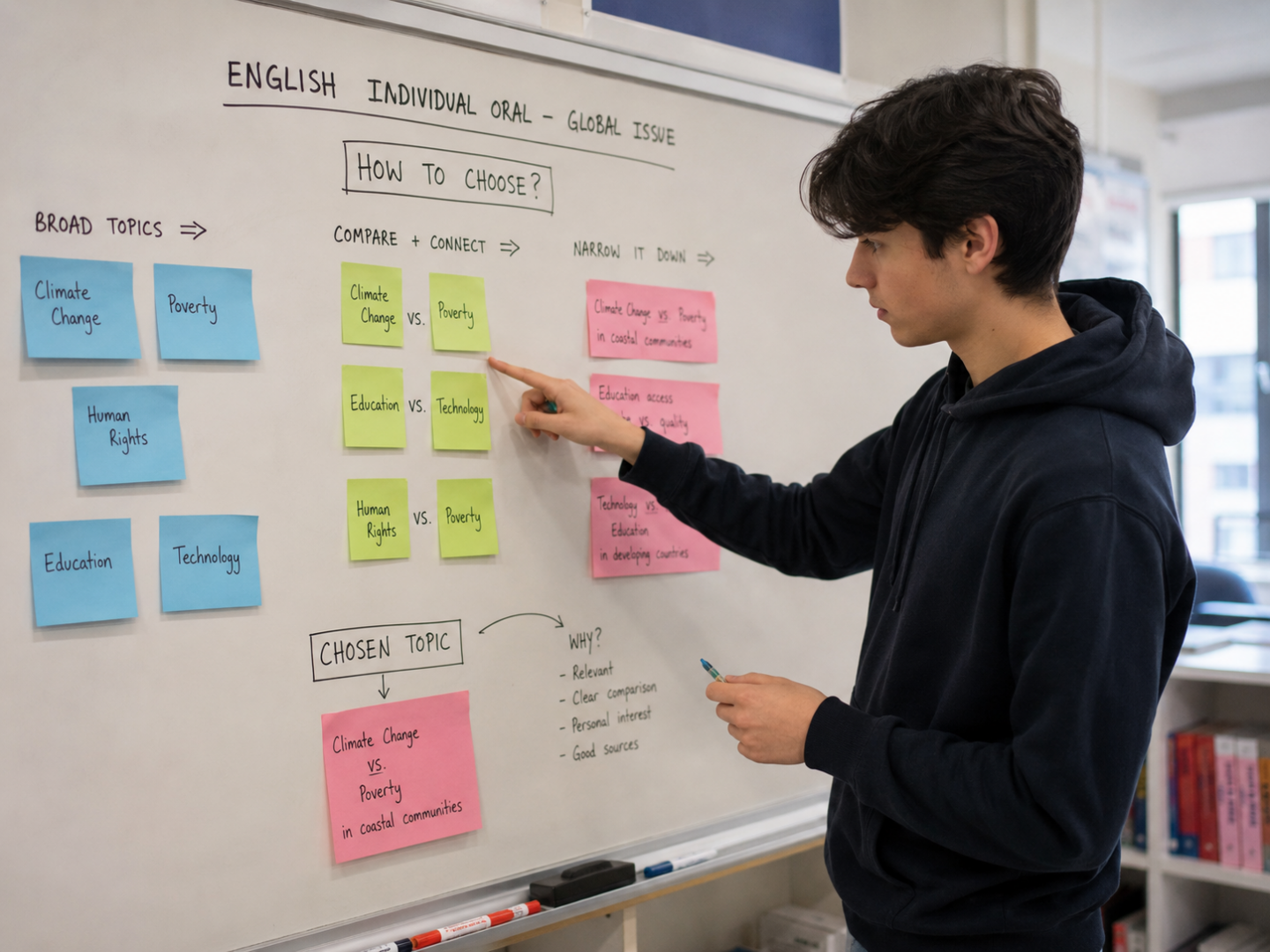
A strong global issue can immediately strengthen your IB English IO. It should be specific, arguable, and clearly present in both texts.
Here is what to consider when developing your idea.
Make It Specific
The most common mistake students make is treating a broad theme as a global issue. Words like “freedom,” “identity,” or “power” are starting points, not finished issues.
| Broad Theme | Stronger Global Issue |
| Freedom | Censorship and restrictions on freedom of expression |
| Identity | How migration reshapes cultural identity |
| Power | The use of propaganda to manipulate public opinion |
| Gender | The marginalisation of women in patriarchal societies |
The more precise your issue, the easier it becomes to analyse authorial choices in real depth. Specificity gives your oral direction and helps you avoid vague, circular arguments.
Ensure Both Texts Clearly Connect to the Issue
Your global issue should connect naturally across both texts. If the links feel forced or repetitive, the issue probably needs refining. A useful check is to ask yourself three questions:
- Can both texts genuinely explore this issue?
- Do they approach it in different ways?
- Can I discuss distinct authorial choices in each text?
The strongest IOs show how two different creators engage with the same issue from contrasting angles, rather than making identical observations about each piece.
Choose an Issue That Allows Stylistic Analysis
The IO assesses literary and stylistic analysis, not history or current affairs. Your global issue therefore needs to be clearly visible through the writer’s or creator’s craft, including:
- imagery and symbolism
- narrative voice and perspective
- structure and sequencing
- irony and satire
- visual composition and colour
- repetition and rhetorical patterns
If you cannot point to clear techniques connected to the issue, it may be too broad or simply not the right fit. The issue and the analysis need to work together.
Pick a Topic You Actually Care About
When a global issue genuinely interests you, your analysis often becomes more confident, thoughtful, and natural. The IO is much easier to prepare and present when the topic feels meaningful to you, rather than simply sounding “safe” or overly academic.
The right global issue helps create a more focused, insightful, and convincing IB English IO.
Strong Global Issue Examples for IB English IO
Looking at strong global issue examples for IB English can help you understand what the right level of specificity looks like in practice.
Here are four examples that tend to work well for students.
Gender Inequality and Patriarchal Expectations
This is one of the most versatile and effective global issues for the IO because it opens up analysis of:
- gender roles and societal expectations
- power structures and control
- representation and identity
- systemic inequality and oppression
It works especially well with texts that explore family dynamics, discrimination, bodily autonomy, or the suppression of individual identity.
Media Manipulation and Public Perception
This global issue is highly relevant today and works well across political speeches, media, dystopian fiction, and documentary photography, allowing students to analyse rhetoric, emotional appeals, visual manipulation, and narrative framing.
Racial Stereotyping in Media Representation
This global issue creates strong opportunities to analyse:
- bias and stereotyping in language and imagery
- representation and cultural power dynamics
- marginalisation and erasure
It is particularly effective when working with texts that combine visual and linguistic elements, such as film posters, journalism, or advertising alongside literary works.
Censorship and Freedom of Expression
This global issue is focused, globally relevant, and offers strong stylistic analysis opportunities, covering the silencing of individual voices, state surveillance, suppression of dissent, and language as a tool of power. It also works across a wide variety of HL and SL texts, giving you more flexibility when selecting the two works.
It also works across a wide variety of literary and non-literary texts, which gives you more flexibility when selecting your two works.
Common Mistakes Students Make
Even strong, well prepared students can lose marks through avoidable mistakes. Here are some common IB English IO issues to watch out for, along with helpful tips.
Choosing Themes Instead of Issues
A theme alone is not a global issue. Ideas like “war,” “love,” or “identity” need to become more specific and globally relevant, such as how migration reshapes cultural identity or how discrimination affects self perception. This specificity creates stronger analysis and argument.
Picking an Issue That Is Too Broad
Broad issues often lead to broad analysis. Topics like “corruption,” “inequality,” or “power” can be difficult to connect clearly to specific authorial choices in a ten minute oral. More focused issues create stronger analysis, such as:
- political propaganda and the manipulation of public opinion
- abuse of authority through surveillance and control
- the use of language to maintain systemic power
These issues are specific enough to explore with greater precision.
Forcing a Connection Between Texts
Some students choose a global issue that fits one text perfectly but barely applies to the other. This creates awkward, repetitive, or unconvincing analysis. The two works should connect to the issue naturally and offer different angles on it. If you find yourself working hard to justify why the second text is relevant, that is worth paying attention to. A balanced IO feels cohesive, not forced.
Focusing Only on Content Instead of Techniques
One of the biggest mistakes in the IB English IO is spending too much time explaining the text instead of analysing how the creator presents the issue. Examiners reward interpretation and discussion of authorial choices, not plot summary.
A useful structure to follow is:
- Point: what is being argued
- Evidence: the specific moment in the text
- Technique: how the creator constructs it
- Analysis: the effect created
- Global issue link: how it connects to the issue
This structure helps keep the oral analytical and focused throughout.
Conclusion
Choosing the right global issue shapes the quality of your entire IO. A strong issue gives your oral focus, strengthens your argument, and creates better opportunities for stylistic analysis across both texts. The best global issues are specific, globally relevant, and clearly connected to authorial choices. The more precise your issue is, the more natural and confident your oral will feel.
So don’t rush the development process—start early and give your ideas room to grow. Take time to explore different global issues, consult your teacher, and ensure your texts really relate. Remember, a well chosen global issue is what elevates an oral from a basic summary to a high-scoring analysis. If you find yourself struggling, consider partnering with an expert IB English tutor who can push your critical thinking, refine your direction, and support you from planning to final delivery.
Frequently Asked Questions (FAQ)
What is a global issue in IB English IO?
A global issue in IB English IO is a real-world concern that affects people across cultures or societies and can be analysed through the authorial choices made within two texts. It acts as the central connecting thread throughout the entire oral.
How specific should a global issue be?
It should be focused and arguable rather than broad or vague. Themes like “power” or “identity” need to be refined into more precise issues, such as “the use of propaganda to control public opinion” or “how social expectations suppress personal identity.”
Can I use the same global issue for different texts?
Yes. In fact, the IO requires one central global issue that connects both texts. The important thing is that each text explores the issue in a different way, giving you distinct analytical ground to cover.
What are the best global issues for IB English IO?
Strong global issues include gender inequality and patriarchal expectations, censorship and freedom of expression, racial stereotyping in media representation, media manipulation and public perception, and migration and cultural identity. These work well because they are specific enough for detailed analysis while allowing meaningful connections across the two works.
What global issues should I avoid?
Avoid issues that are too broad, vague, or difficult to analyse stylistically. Single word themes like “love,” “war,” or “freedom” usually need further refinement, and issues that only fit one text can make the comparison feel unbalanced.