The Ultimate Guide to the IB Visual Arts Art-Making Inquiries Portfolio (AIP)
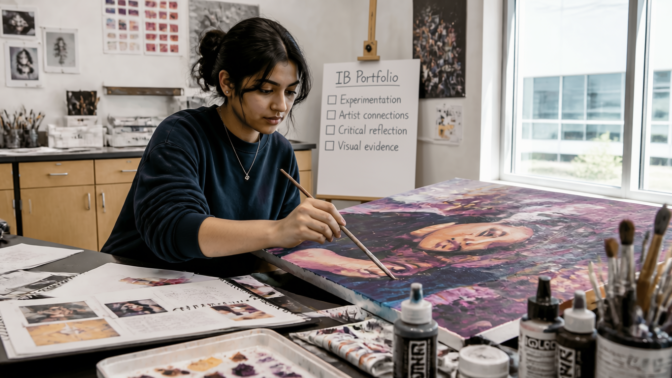
The IB Visual Arts Art-Making Inquiries Portfolio (AIP) is an externally assessed component of the International Baccalaureate (IB) Diploma Programme. It documents how your artistic ideas develop through research, experimentation and reflection.
Under the updated IB Visual Arts syllabus, first assessed in May 2027, there’s a stronger emphasis on art-making as an inquiry-driven process. Your portfolio should show how you’ve explored questions, investigated artistic approaches and refined your work.
This IB Visual Arts AIP guide explains the assessment requirements, key areas of artistic inquiry and practical steps for organising up to 15 portfolio screens.
What Is the IB Visual Arts Art-Making Inquiries Portfolio?
The AIP accounts for 40% of the final IB Visual Arts grade at Standard Level (SL) and 30% at Higher Level (HL).
Rather than presenting finished artworks alone, it reveals the experiments, discoveries and thoughtful choices behind your creative progress.
The AIP replaces the former Process Portfolio and reflects three interconnected curriculum areas: Create, Connect and Communicate. These encourage students to explore ideas, investigate artistic contexts and communicate meaning.
Creativity rarely follows a straight path. You can revisit earlier concepts, experiment with alternatives or change direction as your interests evolve.
Key Submission Requirements (SL vs. HL)
SL and HL students submit an externally assessed AIP worth 40% and 30% of their final grades, respectively. Both levels allow:
- A maximum of 15 PDF screens.
- Up to 3,000 words.
- Assessment out of 32 marks.
- A separate text file listing sources.
Your portfolio must explicitly include inquiry questions or generative statements, supported by visual evidence and critical reflection showing artistic development.
Need help with this subject?
100 % of tutors are certified teachers and examiners


Key Areas of Artistic Inquiry to Demonstrate in Your AIP
The AIP is assessed out of 32 marks, emphasising personal investigations, artistic development, critical reflection and visual language. The following four areas can guide your evidence selection but aren’t official IB assessment criteria.
1. Exploration and Experimentation
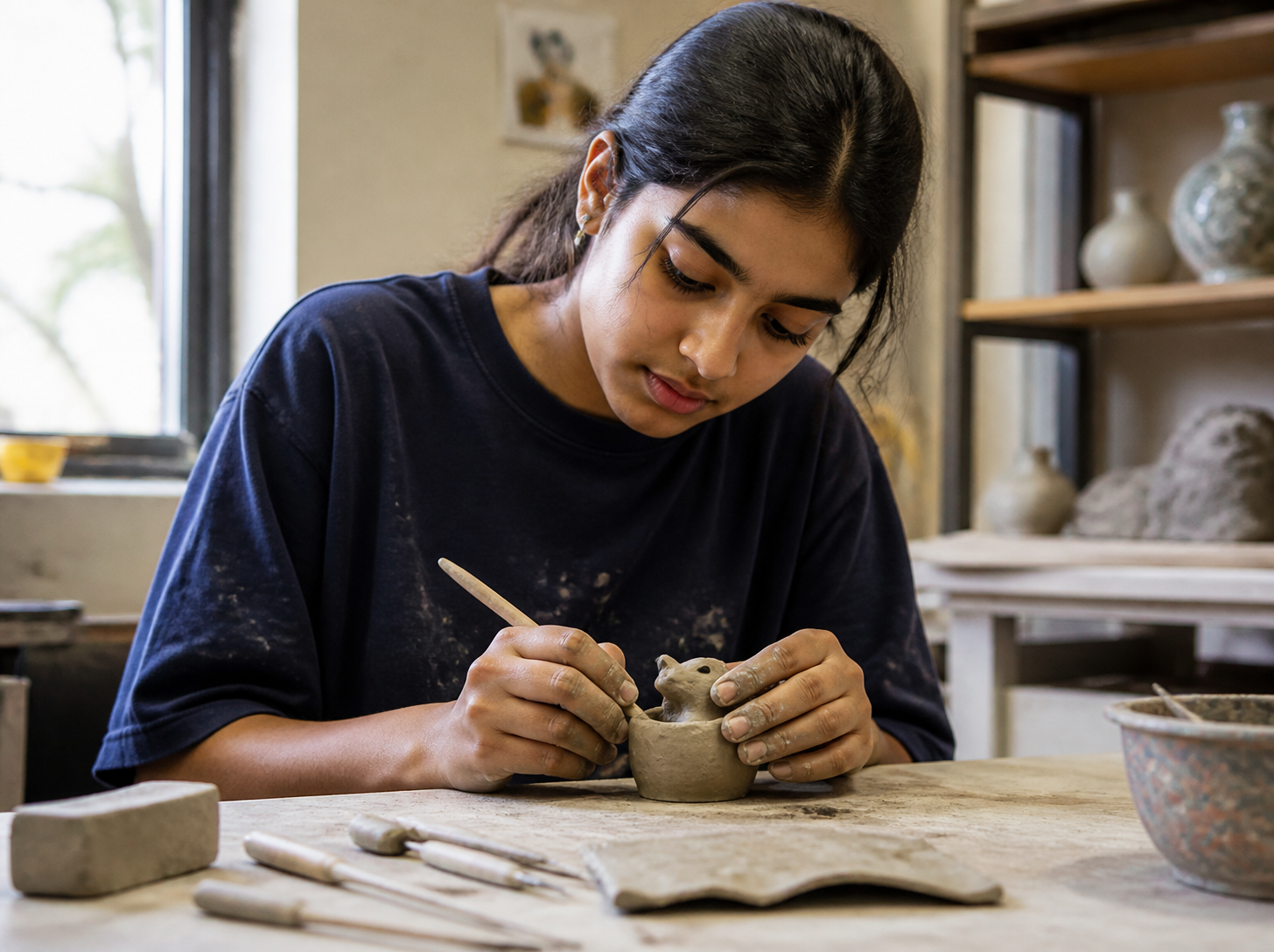
Explore different materials, techniques and creative strategies to develop your artistic intentions and personal visual language.
To demonstrate effective exploration:
- Experiment with different media, techniques and approaches.
- Explore strategies such as layering, distortion or repetition.
- Explain how experiments influence your artistic decisions.
- Show how your visual language develops.
Focus on purposeful experimentation rather than isolated material tests.
2. Practical Investigation
Investigate relevant artists, artworks and contexts, showing how their concepts and techniques influence your creative decisions.
Useful evidence includes:
- Analysis of relevant artists’ techniques and concepts.
- Practical experiments inspired by research.
- Comparisons between artistic approaches and your work.
- Reflections explaining how research influenced decisions.
Prioritise meaningful artistic connections over lengthy biographies.
3. Lines of Inquiry
The revised syllabus requires personal lines of inquiry. Your AIP must explicitly state the inquiry questions or generative statements guiding your investigations.
A strong guiding question encourages curiosity without requiring you to determine the final outcome immediately.
To develop meaningful IB Visual Arts lines of inquiry:
- Start with a subject connected to your interests.
- Identify techniques or visual qualities to investigate.
- Formulate open-ended questions.
- Document how your ideas evolve.
Your inquiry can change as new discoveries influence your artistic direction.
4. Critical Reflection and Review
Critical reflection helps you evaluate your choices, learn from experiments and identify opportunities for improvement.
Include evidence of:
- Evaluations of successful and unsuccessful experiments.
- Changes following feedback or critique.
- Comparisons showing artistic development.
- Explanations of how revisions improved your work.
For example, removing a distracting background might improve your composition. Explain what prompted this adjustment and how it strengthened the overall piece.
How to Develop Your AIP Through Artistic Inquiry
Generate, Investigate, Refine and Curate provide a flexible framework for developing your AIP. These stages aren’t official marking categories, and you can move between them as your ideas progress.
1. Generate: Develop Your Artistic Intentions
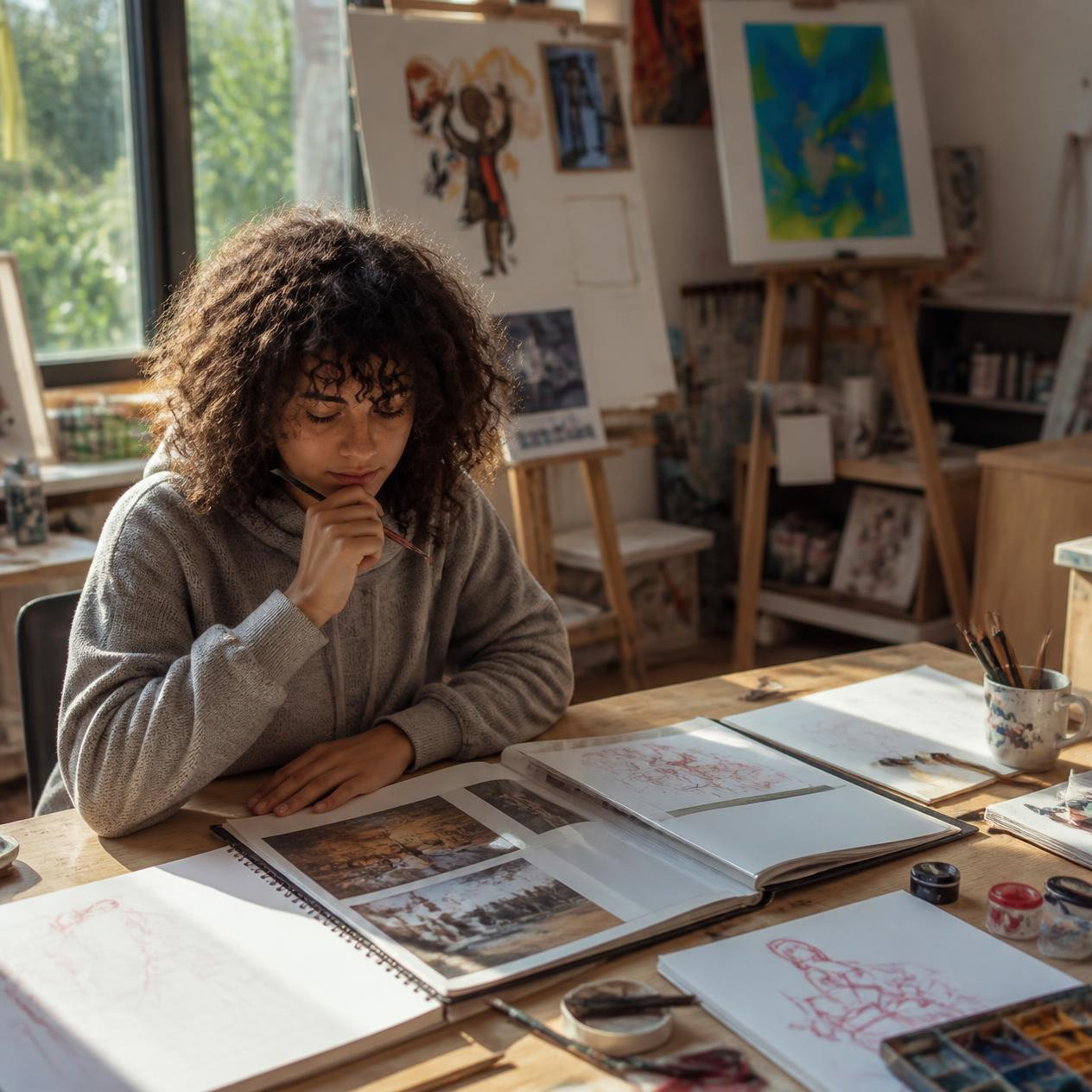
Begin by exploring ideas, experiences or questions through sketches, mind maps and photographs. Use these initial investigations to develop a clear inquiry question or generative statement.
2. Investigate: Explore Materials and Contexts
Experiment with materials and techniques while researching relevant artists. Consider relationships between artist, artwork, context and audience. These connections can help you communicate meaning through your own work.
3. Refine: Evaluate and Improve
Use experimentation, feedback and self-evaluation to develop your artistic decisions. Unexpected results can reveal new possibilities. Document what you’ve learned and how it influences your next experiment.
4. Curate: Communicate Your Artistic Journey
Select experiments that best demonstrate your artistic development, including important discoveries, decisions and changes in your personal visual language.
Together, these stages help you build a connected inquiry supported by purposeful artistic evidence.
Suggested Blueprint for Organising Up to 15 AIP Screens
The IB permits up to 15 screens but doesn’t prescribe a fixed layout or require you to use every screen. The structure below is a suggested approach rather than an official template. Adjust it according to your creative process.
Screens 1–3: Lines of Inquiry and Early Ideation
Introduce your artistic direction through guiding questions, initial ideas and contextual research.
- Screen 1: Introduce your inquiry. Present your question, imagery and intentions.
- Screen 2: Develop ideas. Include sketches, photographs or mind maps.
- Screen 3: Explore contextual research. Investigate relevant artists and influences.
Connect your early investigations to your artistic intentions.
Screens 4–11: Media Exploration, Testing and Pivots
Use these screens to document practical experiments, artistic decisions and refinements.
- Screen 4: Initial material experiments.
- Screen 5: Media and technique comparisons.
- Screen 6: Responses to artist research.
- Screen 7: Composition and concept development.
- Screen 8: Alternative approaches.
- Screen 9: Challenges and unsuccessful attempts.
- Screen 10: Feedback and revisions.
- Screen 11: Connections between experiments and outcomes.
For example, compare oil and acrylic paint on raw canvas, explaining how their textures influenced your intentions and which approach you developed further.
Screens 12–15: Synthesis, Reflection and Curation
Use the remaining screens to connect your investigations and demonstrate artistic growth.
- Screen 12: Connect investigations. Link experiments, research and artworks.
- Screen 13: Demonstrate refinement. Highlight important technical or compositional changes.
- Screen 14: Evaluate outcomes. Reflect on your progress against your inquiry.
- Screen 15: Communicate development. Present evidence of your evolving artistic practice.
Your final selection should demonstrate a coherent artistic journey rather than repeat earlier evidence.
Design and Layout Tips for Maximum Visual Impact
A clear IB Art AIP screen layout helps examiners understand your artistic development.
Balancing Text and Visual Evidence
Prioritise visual documentation, using concise annotations to explain your artistic decisions rather than describe what’s already visible. You could use approximately 100 to 200 words on some screens as a starting point, but this isn’t an official IB recommendation or a target for every screen.
The important requirement is to stay within 3,000 words across the entire portfolio while allowing enough space for meaningful visual evidence. Some screens may need very little text.
For example:
Descriptive: I experimented with blue acrylic paint and added several layers.
Reflective: Layering translucent blue acrylic created a sense of distance, supporting my investigation into fading memories.
For effective presentation:
- Use clear, high-resolution photographs.
- Place related experiments together for comparison.
- Add arrows or short labels to highlight changes.
- Maintain consistent fonts and spacing.
- Keep reflections close to relevant images.
These choices make your artistic thinking easier to follow.
Common Formatting Pitfalls to Avoid
Poor presentation can make strong investigations difficult to assess. Avoid these common mistakes:
- Crowded screens: Too many images obscure important details.
- Excessive description: Long paragraphs distract from visual evidence.
- Poor image quality: Blurry photographs hide techniques and textures.
- Disconnected research: Artist references lack links to your experiments.
- Missing development: Only successful outcomes are shown.
- Unclear organisation: Screens don’t communicate a connected inquiry.
Review your PDF at normal viewing size before submission.
Frequently Asked Questions (FAQ)
What Is the Difference Between the Process Portfolio and the Art-Making Inquiries Portfolio?
The Process Portfolio was last assessed in 2026, while the AIP is first assessed in May 2027.
The revised AIP has identical submission limits for SL and HL: 15 screens and 3,000 words. Unlike the former portfolio, it explicitly requires inquiry questions or generative statements and emphasises the development of personal visual language.
How Many Words Should Be on Each Screen?
There’s no official word count per screen. The maximum is 3,000 words across 15 PDF screens. Keep annotations brief and focus on explaining significant discoveries, choices and improvements.
Do I Need to Include Completed Artworks in My AIP?
Yes, you can incorporate completed pieces when they help communicate your inquiry. However, your submission should also capture the studies, experimentation and critical thinking that informed those outcomes.
Can I Change My Inquiry Question During the AIP?
Yes. The revised syllabus supports flexible, iterative inquiry. Document why your question changed and how the new direction influenced your artistic decisions.
How Is the IB Visual Arts AIP Marked?
The AIP is externally assessed out of 32 marks at SL and HL. The official 2027 Subject Brief refers to assessment criteria and level descriptors but doesn’t list individual AIP criterion names or mark allocations.
What is the IB Visual Arts AIP Submission Checklist?
Before submitting your IB Visual Arts Art-Making Inquiries Portfolio, review these five essential requirements.
Official IB submission requirements:
- Portfolio: Maximum 15 PDF screens and 3,000 words.
- Sources: Separate text file listing references.
- Inquiry: Explicit guiding questions or generative statements.
Recommended content checks:
- Experimentation: Relevant materials and techniques are documented.
- Artist connections: Research meaningfully informs your practice.
- Critical reflection: Decisions and refinements are explained.
- Visual evidence: Selected work demonstrates artistic development.
These content checks are practical recommendations, not a separate official IB assessment checklist.