Mastering the IB Visual Arts IA: Complete Guide to Resolved Artworks (SL vs. HL)
The IB Visual Arts Internal Assessment (IA) demonstrates your artistic ideas and technical skills through a coherent collection of artworks. Under the revised syllabus, first assessed in May 2027, students complete Resolved Artworks at Standard Level (SL) or Selected Resolved Artworks at Higher Level (HL). Both contribute 40% of the final IB Visual Arts grade.
This guide covers the SL and HL requirements, how to write your rationale, the assessment criteria and practical tips for preparing your submission.
What Makes an Artwork ‘Resolved’ in IB Visual Arts?
A resolved artwork communicates your artistic intentions through purposeful use of materials and techniques. Under the revised syllabus, students resolve artworks by combining concept and form to communicate meaning. An artwork doesn’t need to appear perfectly finished, as long as its materials and techniques support the intended meaning.
For example, blurred photographs, torn paper or overlapping images can effectively communicate fragmented memories.
The IB Visual Arts IA focuses on three important qualities:
- Artistic intentions: The ideas, experiences or questions guiding your work.
- Conceptual realisation: How effectively your ideas are communicated through visual forms.
- Technical resolution: Your ability to use materials, processes and formal qualities purposefully.
Examiners should see all three in the artworks themselves, so don’t rely on your writing to do that job for you.
Need help with this subject?
100 % of tutors are certified teachers and examiners
Breadth of Artistic Practice vs. Thematic Focus
Your artworks can explore different media, such as painting, photography or sculpture, or you can develop one medium through varied techniques. The revised course requires engagement with varied art-making forms and creative strategies, although your five IA artworks don’t each need a different medium.
Your final selection should prioritise artistic intention, technical control and meaningful connections between pieces.
SL vs. HL IB Visual Arts: Key Differences
Your final selection should prioritise artistic intention, technical control and connections across your artworks. The table below compares the requirements under the revised IB Visual Arts syllabus and the official 2027 subject brief.
| Requirement | Standard Level (SL) | Higher Level (HL) |
| IA component | Resolved artworks | Selected resolved artworks |
| Weighting | 40% | 40% |
| Total marks | 32 | 40 |
| Final artworks | 5 | 5 selected from at least 8 |
| Rationale | Up to 700 words | Up to 700 words |
| Documentation PDF | Up to 2 screens | Up to 8 screens |
| Artwork texts | Not required | 5 texts, 1,000 words combined |
| Unselected artwork images | Not required | 3 required |
| Artistic context criterion | Not assessed separately | 8 marks |
| Mandatory IA files | 6 | 6 |
| Artwork formats | Image or video | Image or video |
Students at both levels submit five artwork files, each accompanied by its title, medium and size. Videos may last up to three minutes, and students may include up to two optional supporting images per artwork.
Standard Level: Creating Five Resolved Artworks
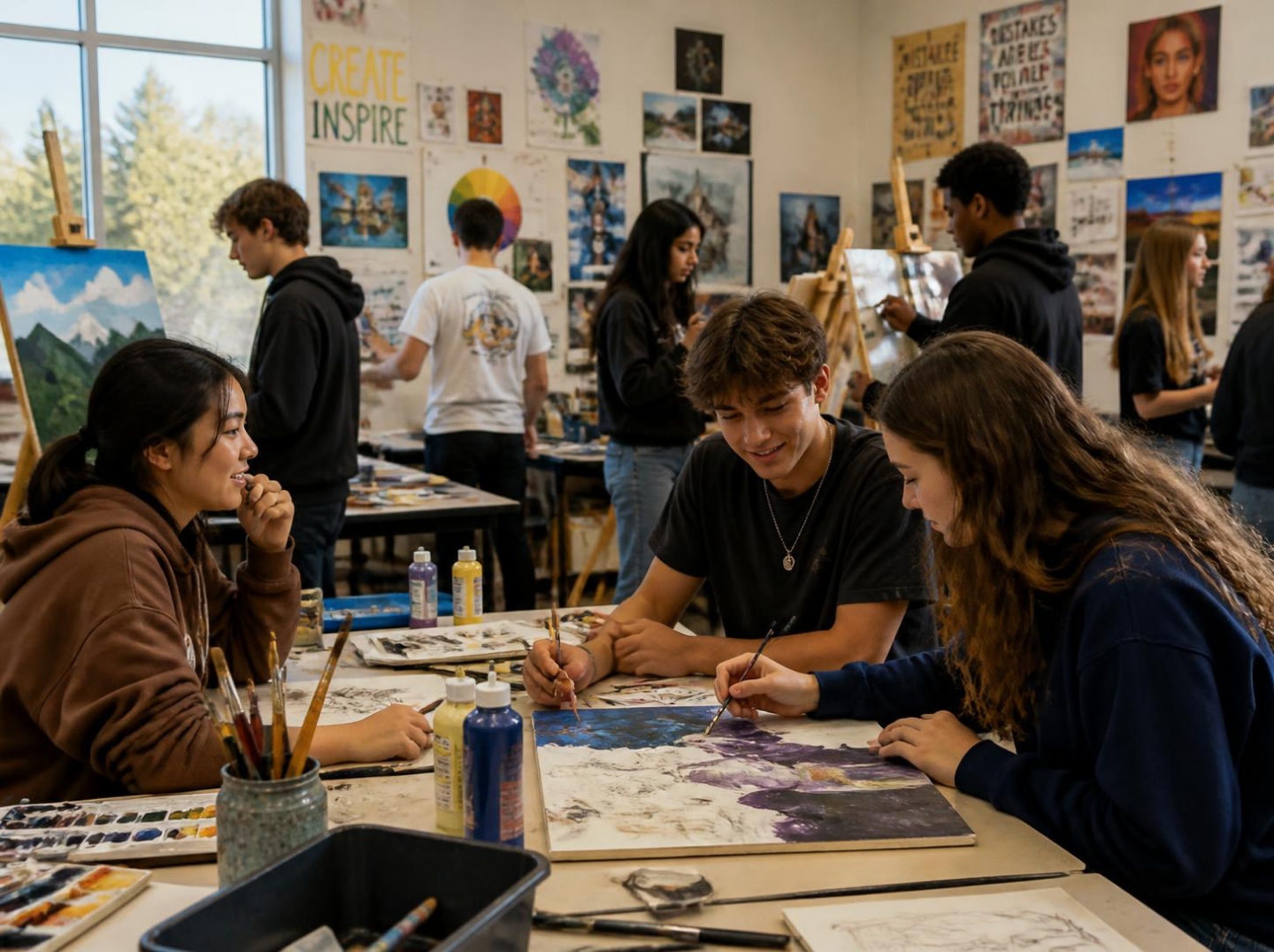
At SL, you create five resolved artworks that share a coherent artistic direction, while each offering a distinct perspective. For example, you could explore environmental change through painting, photography and mixed media.
Your rationale should explain your intentions, technical choices and how the artworks work together as a collection. The focus is on communicating your intentions coherently through concept, form and technical resolution.
Higher Level: Selecting and Justifying Your Artworks
At HL, you create at least eight resolved artworks and choose the five that best show your intentions, conceptual development and technical skills. Your rationale needs to include images of three unselected artworks so you can discuss how you made your choices.
You also write five artwork texts that link your selected pieces to personal and wider artistic contexts. These texts should critically explain how each artwork relates to your developing practice and wider artistic influences.
How to Write Your IB Visual Arts Rationale
The rationale demonstrates your artistic intentions and how your artworks connect. Unlike the previous syllabus’s exhibition-based curatorial rationale, the revised task focuses on your coherent body of resolved artworks. SL and HL students both have a maximum of 700 words to explain their decisions clearly and concisely.
1. Introduce Your Central Artistic Intention
Start with the main idea that holds your collection together. Your intention might come from personal experiences, cultural identity, environmental concerns or artistic investigations. For example:
“My body of work explores how childhood memories change over time, using fragmented imagery and layered materials to represent the relationship between memory and identity.”
This gives examiners a well-developed starting point for understanding your collection.
2. Explain How Your Artworks Connect
Next, talk about how your five pieces relate to each other. Demonstrate how individual artworks approach the same concept from different angles, or how visual elements develop across the collection.
Don’t simply describe what each piece contains. Explain how your choices connect the artworks. For example, increasingly transparent layers across several artworks might communicate the gradual fading of memories.
3. Justify Your Technical and Stylistic Choices
Justify how your materials and techniques support your intentions. Consider how composition, colour, texture, scale and media shape meaning. You could discuss why you chose charcoal instead of paint, or how lighting affects the emotional atmosphere of a photograph.
Be specific. Rather than writing “I used blue because it represents sadness”, describe how the colour creates a particular visual effect that connects to your concept.
4. Explain Your Final Selection
This is particularly important at HL. Say why your five selected artworks are your strongest and what each one adds to the collection. Describe how you selected them and refer to the three images of unselected works.
At both levels, your rationale should accurately reflect your submitted artworks. Exhibition layout and display space are no longer separate IA requirements.
Managing the Rationale Word Count
The official IB maximum is 700 words. Clastify suggests aiming for roughly 300 to 400 words, though that isn’t an official IB recommendation. Prioritise clear explanations of your intentions, connections and artistic decisions rather than trying to reach a particular word count. A strong IB Visual Arts rationale demonstrates your artistic intentions, connections between artworks and creative choices.
HL Artwork Texts: Connecting Art to Wider Contexts
HL students submit five artwork texts totalling no more than 1,000 words, alongside their rationale in a PDF limited to eight screens. Each text should critically explain how the artwork connects to their developing practice and wider artistic contexts, including the following.
- Other artists and artistic movements.
- Cultural traditions and historical developments.
- Contemporary social or environmental issues.
- Personal experiences and community influences.
- Artistic practices you’ve adapted or challenged.
Whichever you choose, the aim is to show how these connections shaped your creative decisions.
For example, if Käthe Kollwitz influenced your exploration of grief, demonstrate how her treatment of tone, gesture or composition informed your own work, then describe how your materials led you to a different interpretation.
Naming an influential artist or summarising their biography won’t show the critical understanding expected at HL. Instead, explain how artistic influences and contexts informed your choices and developing practice.
How to Score a 7: Understanding the IB Visual Arts Assessment Criteria
The Internal Assessment (IA) evaluates a coherent collection of five resolved artworks through coherence, conceptual realisation and technical resolution. HL students must also demonstrate critical understanding of artistic contexts.
Criterion A: Coherence of Body of Artworks
This evaluates how effectively your five artworks form a coherent collection. Your artistic intentions should connect the pieces while allowing each artwork to contribute something distinct. Strong submissions explore a central concept through different perspectives while maintaining a consistent creative direction.
Criterion B: Conceptual Realization
This focuses on how effectively your ideas are communicated through artistic form. For example, distorted portraits or digital manipulation could explore online identity. Develop a personal visual language that connects your concepts with deliberate visual and material decisions.
Criterion C: Technical Resolution
This examines your control of media, processes and formal qualities, including composition, colour, texture and scale. Technical competence doesn’t require realism. Instead, demonstrate how your chosen methods, such as video editing or sculptural techniques, contribute to the intended meaning.
Criterion D: Understanding of Artistic Context (HL Only)
At HL, students critically situate each selected artwork within their developing practice and wider artistic contexts. Your artwork texts should analyse how artistic influences, cultural references or personal experiences informed your work.
Keep in mind that a final grade of 7 depends on your overall IB Visual Arts performance, not on your IA marks alone.
IB Visual Arts IA Submission Checklist
Before you submit, review your artistic evidence and documentation. This checklist should help you spot anything still needing attention.
- I’ve submitted exactly five resolved artworks.
- At HL, I’ve selected five artworks from at least eight resolved works.
- At HL, I’ve included images of three unselected artworks in my rationale.
- My artworks communicate clear intentions and form a coherent collection.
- I’ve included each artwork’s title, medium and size.
- My digital images are relevant, accurately coloured and properly framed.
- Any artwork videos are no longer than three minutes.
- I’ve included no more than two optional supporting images per artwork.
- My rationale is within 700 words and the relevant screen limit.
- At HL, my PDF contains five artwork texts within the combined 1,000 word limit and doesn’t exceed eight screens.
- I’ve checked file formats, relevant citations and my school’s submission deadline.
- I’ve prepared all mandatory IA files and checked relevant citations, formats and submission deadlines.
Once you have completed the checklist, consult your teacher to ensure that your submission meets the requirements for your assessment session.
Final Tips for a Strong IB Visual Arts IA
Successful resolved artworks combine distinct artistic intentions, thoughtful experimentation and purposeful creative choices. Each piece should contribute to your central investigation, while your rationale and texts explain your decisions. For HL students, careful selection and critical contextual analysis are essential to meeting the IB Visual Arts assessment criteria.
If you need extra support, our IB Visual Arts tutors can guide you through the assessment requirements and help you develop your artistic skills with confidence.