IB Visual Arts SL Connections Study: What to Do and What to Avoid for Top Marks

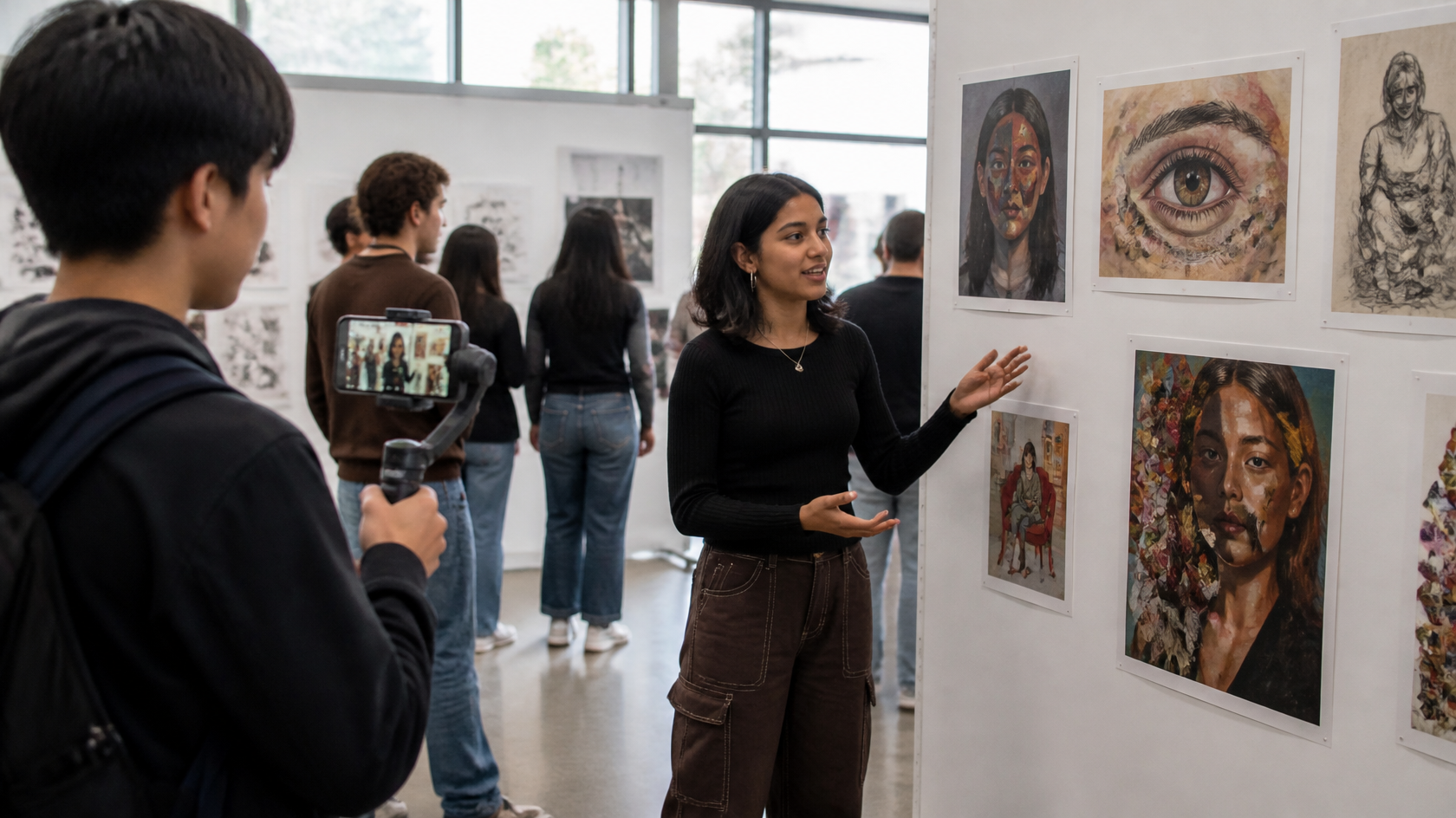
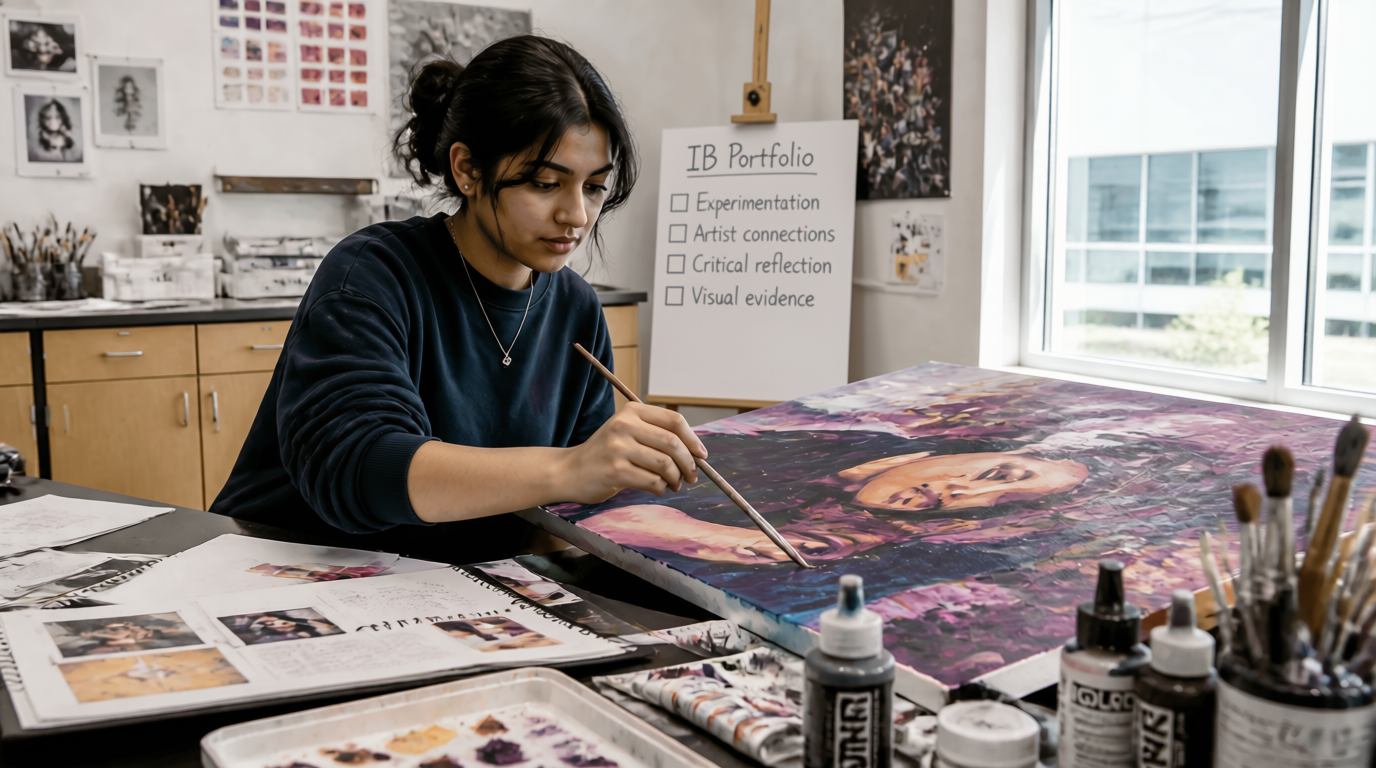
The IB Visual Arts SL Connections Study is a new assessment task under the revised syllabus, first assessed in May 2027. Replacing the previous Comparative Study, it focuses on connecting your own resolved artwork with works by other artists, exploring creative choices and cultural contexts.
This guide covers the key requirements, practical tips, common mistakes and a suggested screen structure to help you prepare a strong, focused submission.
What Is the IB Visual Arts SL Connections Study?
The IB Visual Arts Connections Study is an externally assessed part of the SL course. You’ll choose one resolved artwork from the five you submitted for your Internal Assessment (IA). Then you’ll examine its connections to at least two artworks by different artists, thinking about their artistic choices, meanings and cultural contexts. Unlike the old Comparative Study, your own artwork sits at the centre of the investigation.
Need help with this subject?
100 % of tutors are certified teachers and examiners


IB Visual Arts SL Connections Study Requirements
Here are the key requirements to understand before you start.
| Requirement | Details |
| Assessment | SL Connections Study |
| First assessment | May 2027 |
| Submission | Up to 10 screens |
| Word limit | Maximum 2,500 words |
| Student artwork | One resolved artwork selected from your IA |
| External artworks | At least two artworks by different artists |
| Main focus | Artistic connections, contextual understanding and cultural significance |
| New artwork required | No |
Your task is to explain how the artworks connect through artistic intentions, formal qualities, cultural influences or shared concepts. Cultural significance means how an artwork relates to the beliefs, experiences, values or circumstances of the people and communities connected to it. The strongest submissions prove these relationships with specific visual evidence rather than general observations.
What to Do in Your IB Visual Arts SL Connections Study
A successful study begins with thoughtful choices. Your artwork, your chosen artists and your central inquiry should work together. These strategies will help you analyse more strongly and communicate your findings clearly.
1. DO Choose a Resolved Artwork With Meaningful Connections
Review your five resolved IA artworks and choose one with clear artistic intentions and strong potential for comparison. Look for these qualities:
- Clear intention: You can explain the ideas or emotions behind your work.
- Visual language: Your colours, composition and materials communicate meaning.
- Contextual relevance: Your work reflects personal, cultural or social influences.
- Artistic connections: You can identify meaningful links with other artists.
For example, a mixed media portrait exploring cultural identity could connect to artists who use symbolism and portraiture to express belonging.
2. DO Select Two Artists Who Strengthen Your Investigation
Choose at least two artworks by different artists that offer meaningful connections to your own work. Artists from different cultures, periods or traditions can provide useful perspectives, but relevance matters more than contrast.
For example, if your artwork explores memory through textiles, consider:
- Louise Bourgeois: Uses fabric and domestic materials to express personal memories and emotions.
- Faith Ringgold: Combines textiles and storytelling to explore cultural identity and collective histories.
Both offer different perspectives on materials, memory and meaning. Focus on specific artworks rather than the artists’ entire careers.
3. DO Develop a Clear Central Line of Inquiry
A central line of inquiry keeps your Connections Study focused. For example: How do artists use textiles and symbolism to express cultural identity and memory?
Use your inquiry to explore three areas:
- Conceptual connections: Shared themes, ideas or intentions.
- Formal connections: Similarities in colour, composition, materials or techniques.
- Contextual connections: How personal, cultural or historical influences shape meaning.
Keep your analysis relevant and avoid forcing connections that the artworks don’t support.
4. DO Use Visual Evidence to Support Your Comparisons
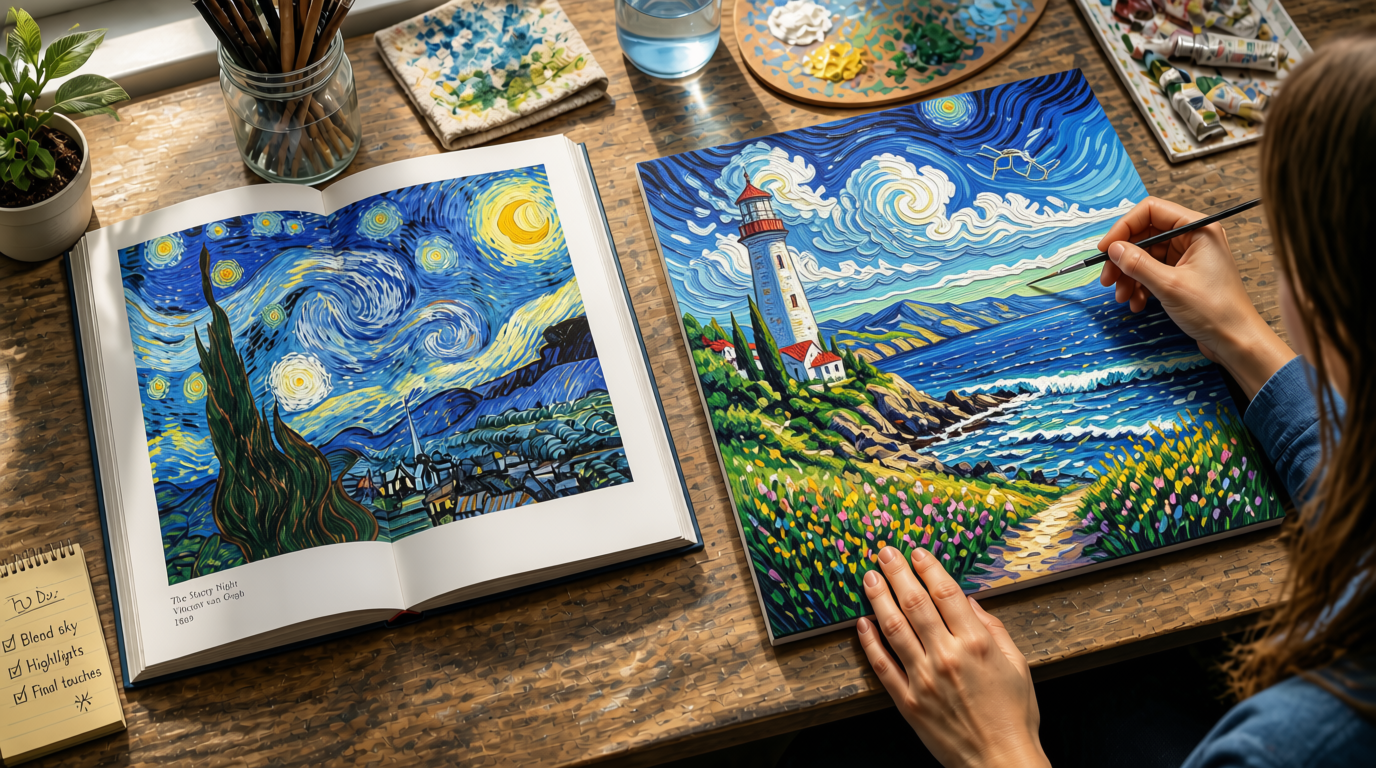
Keep visual analysis central by using images and concise annotations to highlight meaningful connections between artworks. These techniques can help:
- Enlarged details: Highlight important artistic choices.
- Arrows: Show compositional relationships.
- Annotations: Explain symbolism, materials or techniques.
- Side by side comparisons: Identify similarities and differences.
Go beyond description. Instead of writing “Both artworks use red”, explain how the colour communicates emotion or cultural meaning. Each visual should support your analysis.
5. DO Use Appropriate Visual Arts Terminology
Accurate vocabulary makes your analysis more precise. You don’t need fancy language, just words that describe what you can see and explain. This table shows some useful terms.
| Term | Meaning |
| Visual language | The artistic elements and choices used to communicate meaning |
| Materiality | How the physical qualities of materials contribute to an artwork |
| Iconography | Images and symbols linked to particular meanings |
| Composition | How visual elements are arranged |
| Cultural context | The social, historical or cultural circumstances around an artwork |
| Juxtaposition | Placing contrasting elements together to create meaning |
Compare “The artist uses interesting materials” with “The rough fabric emphasises the physical and emotional connections between memory and personal identity.” The second is far stronger. Use terms naturally, because clear explanations beat complicated sentences.
6. DO Keep Your Screens Clear and Visually Organised
This is a visual submission, so presentation matters. Give each screen a clear purpose, with room for artworks, annotations and writing. These principles will keep you on track.
- Use high resolution images that show important details.
- Keep fonts, headings and spacing consistent.
- Place annotations close to the features they explain.
- Include artwork details and source references.
- Avoid crowding screens with unnecessary text.
A clean layout helps examiners follow your investigation and see how your evidence supports your conclusions.
What to Avoid in Your IB Visual Arts SL Connections Study
Even thoughtful investigations lose clarity when description replaces analysis. Here are the most common mistakes.
1. DON’T Include Lengthy Artist Biographies
Background matters when it explains the artwork. Long accounts of education, career achievements or personal history only distract. Choose context that directly informs your interpretation. For Faith Ringgold, her engagement with African American history and storytelling helps explain the cultural significance of her work. Keep biography selective and tie it to visual evidence.
2. DON’T Make Superficial Comparisons
Spotting similarities doesn’t show real understanding. Statements like “Both artworks contain flowers” offer limited analysis, so explain why those choices matter. For example: While both artworks feature flowers, one uses them to represent personal remembrance, whereas the other explores cultural traditions around mourning. That shows how one visual element can carry different meanings.
3. DON’T Choose Unrelated Artworks
Don’t pick famous artworks just because they look impressive or are widely recognised. Every artwork should contribute to a coherent investigation. If you struggle to explain how one relates to your work, reconsider it. A lesser known piece with strong conceptual and contextual links will often serve you better than a famous one with little relevance.
4. DON’T Overload Your Screens With Text
There’s a word limit, but you don’t have to fill every space. Big blocks of writing bury your best observations. Use short paragraphs, precise annotations and well organised images. Every sentence should add to your analysis, your contextual understanding or your explanation of connections.
5. DON’T Ignore Cultural Context
Analysing formal qualities without context limits your understanding. Explore how traditions, historical events, personal experiences or social conditions influence artistic decisions. Avoid assuming an artist’s intentions from their nationality or identity alone. Back up contextual claims with reliable research and link them to features you can see in the artwork.
6. DON’T Forget Academic Referencing
You must acknowledge your sources. Credit artwork images, direct quotations and research materials, and include the artist’s name, title, date and medium where available. Follow your school’s referencing guidance and keep your citation format consistent.
Suggested 10 Screen Structure for the SL Connections Study
The IB doesn’t prescribe a fixed screen layout, but a clear structure can help you organise your research. Here’s one way to arrange your 10 screens.
- Screen 1: Title, central inquiry and overview of the three artworks.
- Screen 2: Artist 1, formal analysis and artistic choices.
- Screen 3: Artist 1, cultural context and significance.
- Screen 4: Artist 2, formal analysis and artistic choices.
- Screen 5: Artist 2, cultural context and significance.
- Screen 6: Your resolved artwork, intentions and personal context.
- Screen 7: Your resolved artwork, materials, techniques and visual language.
- Screen 8: Connections between your artwork and Artist 1.
- Screen 9: Connections between your artwork and Artist 2, including wider comparisons.
- Screen 10: Overall conclusions and references.
You can adapt this structure to your investigation, as long as your analysis clearly demonstrates meaningful artistic and cultural connections.
How to Strengthen Your Connections Study Before Submission
Once your first draft is finished, read it as a whole. Check that your central inquiry stays visible, your research supports your interpretations and your comparisons explain why artistic decisions matter. Ask your teacher for feedback on clarity and organisation. Then look at your annotations and replace any plain description with stronger interpretation.
Remember, you’re working with an artwork you’ve already resolved for your IA. You don’t need to create anything new for this assessment.
Final IB Visual Arts SL Connections Study Checklist
Before you submit, run through this five point check.
- I’ve clearly presented and analysed one resolved artwork from my IA.
- I’ve connected my artwork to at least two artworks by different artists through a focused inquiry.
- I’ve accurately credited artwork images, quotations and research sources.
- My submission has no more than 10 screens and 2,500 words.
- I’ve prioritised visual analysis, meaningful connections and cultural context over lengthy biographies.
Ticking these off will help you spot missing evidence and sharpen your submission before the final review.
If you need further guidance, our IB Visual Arts tutors at TutorsPlus can help you navigate the revised assessment requirements, strengthen your analytical skills and prepare a well-structured Connections Study.